

The AI-Slopification of Luxury Fashion and the Art Image
Has luxury fashion’s use of the art image abandoned originality as a marker of status, in favour of memetic repetition, vulgarity and provocation?


The currency of luxury fashion brands has traditionally been originality, naturally situating them in close proximity to the artworld. The relationship is quid pro quo: art grants fashion cultural legitimacy, and fashion brings sex appeal and profit. Everyone is happy. Yet a series of recent campaigns from luxury fashion belie a shifting relationship between the two in which originality, once art’s upholding principle, has been replaced by its antithesis – digital slop.
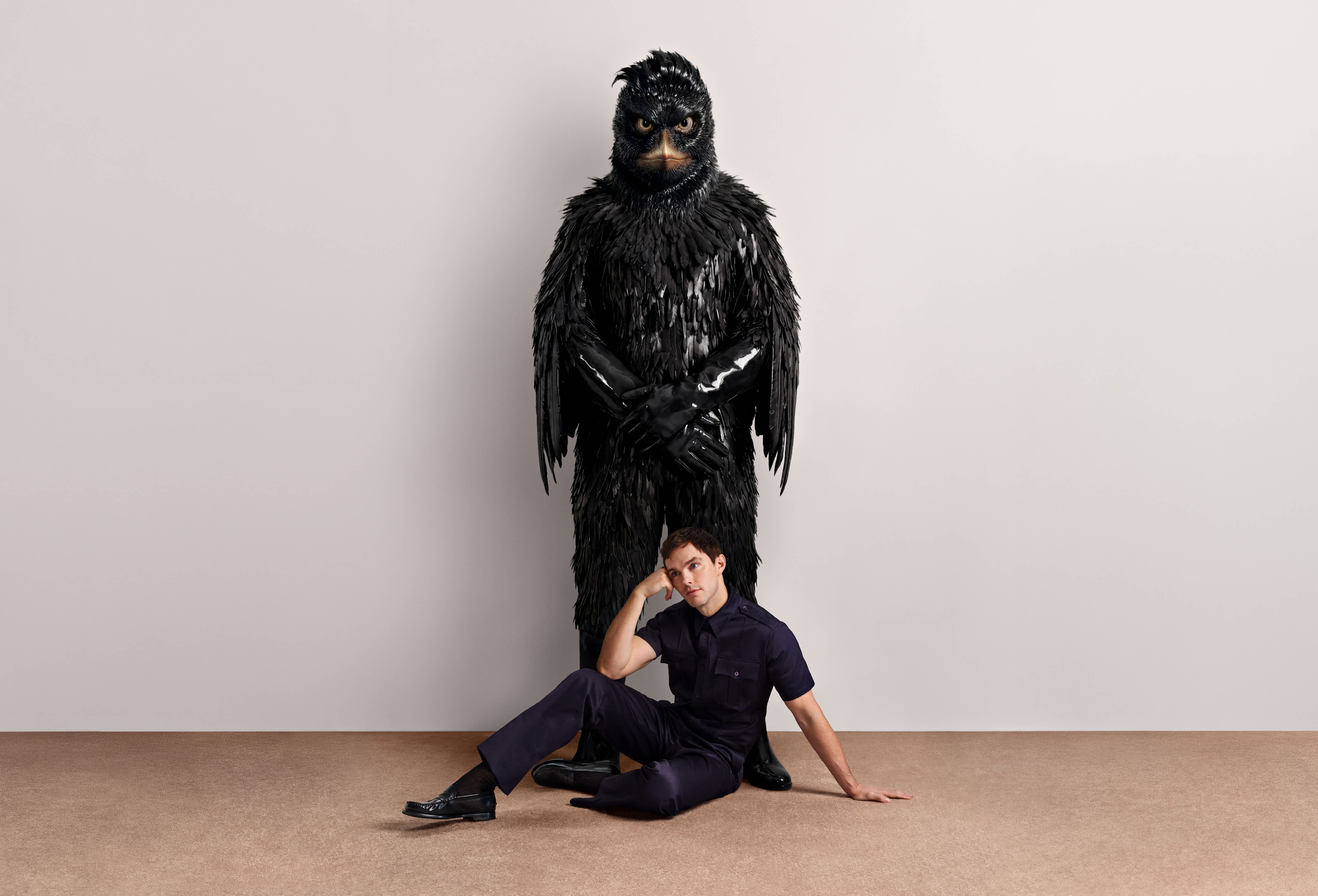
‘I, I, I, I am…’, an SS26 Prada campaign reworked by US artist Jordan Wolfson, is one example. It includes a a computerised Where The Wild Things Are-like vision of bizarrely glossy birds standing aside the likes of Nicholas Hoult, Hunter Schafer and Carey Mulligan. Another is fashion designer Demna Gvasalia’s debut FW26 Gucci collection, ‘Gucci Primavera’. In this case, the clothing itself fused the sex-charged vulgarity of the brand’s Tom Ford-era with a numbed-out internet age edge, à la Fakemink in low-hanging pants. In each, the evocation is equal parts repulsive and entrancing, tapping into the coarseness of late capitalist desire. Through this lens, spending £500 on a logo-font t-shirt is the inevitable byproduct of belonging in this strange new world.
Not long ago, the deformed spawn of cannibalistic AI chatbots and pixelated monsters would have seemed starkly out of place within the gilded walls of fashion. As Nancy J. Troy details in her book, Couture Culture: A Study in Modern Art and Fashion (2003), the virtuosity of fine art has long been present in fashion’s economic model in order to continue the illusion of privileged access to an increasingly abundant field. Troy argues that Paul Poiret, the early-twentieth century magnifique of couture, self-styled as an artist to position himself as a ‘transgressive modernist’ even as he ‘appealed to audiences who customarily disdained the avant-garde’.
In more recent years, cross-industry collaborations have become ubiquitous, from Chanel’s soft power arts patronage to the starchitect-designed Fondation Louis Vuitton. The mutual benefits of partnerships and patronage are well established. Luxury fashion’s experimentation with digital hybrids does not signal a shift away from art as a marketable commodity rather than a shift in what is understood as a valuable image itself.
Of course, fashion is predicated on public appeal and is therefore inherently doomed to foster self-reflexive adoption and pastiche. It is a contradiction that the avant garde has historically resisted, eschewing commerciality in favour of unimpeded innovation. But we are long past the glory days of modernism. It is metamodernism, oscillating between postmodern irony and an earnest search for meaning, that increasingly defines the cultural landscape. We have entered the age of absurdity.
Prada’s recruitment of Wolfson to intervene on images previously taken by Oliver Hadlee Pearch fuses the blatant commercialism of celebrity marketing with something more ambiguous and uncanny. However, despite Wolfson’s adversarial reputation (a 2019 Frieze article about the artist is titled ‘Who Likes Jordan Wolfson?’), dismissing the campaign as rage-bait reduces one of the more significant current trends to the egotism of one man.
Prior to the Demna Gvasalia’s Gucci show, the brand released a series of AI-generated images on its Instagram. Interspersed with a photograph of Sophia Loren shopping in Rome and a 16th century Florentine portrait is a double-G emblazoned satellite in outer space and a recreation of Grand Theft Auto VI’s pink-hued, palm-tree shaded couple straddling the hood of a muscle car. This culture mash speaks the language of the monogrammed fanny packs and bootleg logo tees which appeared in the resultant runway show. Taste has been flattened: the campaign is both provocative and tapping into the democratising effects of the internet.
Of course, the images were divisive. “You did not need to use AI for this, so tacky” one comment beneath the (generated) image of a fur-coated Milanese sciura reads. “Gucci is the new Shein” says another. While Gvasalia might consider himself an artist rather than a businessman, the backlash seems to hinge on the apparent laziness of generative technology, as if its adoption could be nothing more than a cost-cutting measure rather than an intellectual exercise. This is where art comes in, with its shining cape of cultural kudos. The difference between a marketing team prompting ChatGPT and an artist doing the same may ostensibly be nominal, but to a public fluent in advertising imagery, it is crucial. Fashion/digital art partnerships allow luxury brands to tap into art’s intellectualised distance from its technofuturist subjects, while speaking to a deranged but ubiquitous ‘aesthetic of the present’ (see Dean Kissick’s essay ‘The Vulgar Image’).
They also allow a veneer of self-awareness, or cynical sense of humour. In 2025, Valentino enlisted the artist Christopher Royal King (AKA Total Emotional Awareness) to develop an AI-generated campaign for its DeVain bag. The result was a video of the bag transposed with a memetic, distorted montage of images taken over two decades as a touring musician. There is no posing as realism here; King’s practice relies on the glitches and failures of computer imagery to highlight its artificiality. It is a statement on absurdity.
A few critical comments will not be enough to halt the colossal rise of digitised imagery in luxury fashion. When styled as an art image, computerisation is no longer incompatible with ostensibly antithetical marketing initiatives, like emphases on craftsmanship and IRL events. Digital art partnerships both partake in technocapitalism and observe it detachedly. Digital imagery may perform as the opposite of luxury, but its strategic adoption as an art image is a commercial move of ingenious modernity. After all, what else is so democratic – so universally meaningless and simultaneously meaningful – as internet slop.
ella slater is the Assistant Editor of The Art Journal.
Side Eye explores the alt scenes shaping the artworld, surfacing the weirdly specific but widely consequential dynamics that quietly determine what art is worth, and why.
The Art Journal is a new, independent art market publication published by Meta Media Group.
 | A guest post by
|